
Modular Stands – Modern Solutions for Your Brand
Presence at industry trade shows has long remained one of the most effective tools for building relationships, brand image, and sales. A well-designed stand is more than just an exhibition space – it is a stage for the brand, the first point of contact with the client, and often the starting point for long-term collaboration.
For decades – from the 19th century up to the 1960s and 1970s – traditional trade show stands dominated, built individually, most often from wooden frameworks, carpentry boards, and later MDF and mixed materials. These so-called bespoke carpentry constructions were designed and built from scratch for each event. While often visually impressive and architecturally refined, they involved high production and transportation costs, long assembly times, and limited reusability. Any modification to the layout or change in surface area effectively meant constructing a new stand or undertaking an expensive redesign of the existing one.
The breakthrough came in the 1960s and 1970s with the development of aluminum modular systems (including early frame and profile systems such as Octanorm and SYMA). From the 1980s onwards, these systems began to gradually replace traditional constructions, offering reusable structures based on standardized profiles, connectors, and infill panels. Despite their practical advantages, these solutions offered limited possibilities for shaping forms and expressing individuality. The standardization of elements often led to visually repetitive stands that rarely stood out from the competition. Today, such systems are mainly used as basic, cost-effective solutions provided by trade show organizers. They are typically chosen by companies that want to maintain a presence with minimal financial investment, for example at regional trade fairs or smaller industry exhibitions.
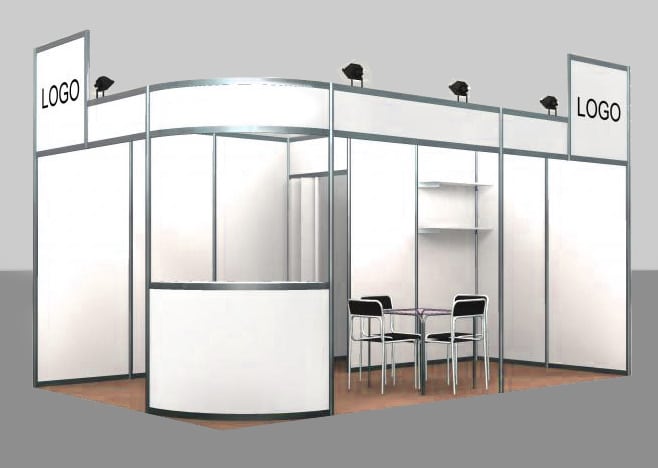
Today, an increasing number of companies are choosing modern modular stands – solutions that are highly innovative, scalable, and adapted to the dynamic realities of the market: easy to transport, quick to assemble, flexible in configuration, and more sustainable. Can the “wow” effect be combined with cost efficiency, sustainability, and speed of execution? From our experience – absolutely yes.
Modular Stand – What Does It Mean?
A modular stand is a system-based construction built from repetitive, standardized elements. It can be compared to building blocks, offering complete freedom for assembly, expansion, and reconfiguration depending on the exhibition space and the brand’s marketing needs.
Popular construction systems
Frame Systems
This is the most classic and versatile system solution (e.g., Octanorm, SYMA). The structure is based on aluminum profiles with assembly grooves, connectors, infill panels (made of wood, glass, Dibond, or fabric), as well as ready-made functional modules such as backrooms, display cases, platforms, or suspended elements.
Advantages:
- Very high durability and structural stability
- Reusable over multiple trade show seasons
- Easy reconfiguration of walls and backroom layouts
- Compatibility with numerous accessories (shelves, display cases, monitors, lighting)
Applications:
- Industry trade shows
- Medium and large exhibition spaces
- Companies exhibiting regularly and needing a functional “long-term” system
Textile Systems
Based on lightweight aluminum frames into which textile graphics with a silicone edge (SEG) are mounted. Often equipped with LED backlighting, these systems create a modern, glowing wall effect that attracts visitors’ attention.
Advantages:
- Modern, seamless appearance with no visible joints
- Highly attractive visual effect thanks to lighting
- Lightweight construction, easy to transport
- Quick replacement of graphics while retaining the same structure
Applications:
- Brands prioritizing a strong visual impact
- Events, conferences, retail spaces
- Small and medium stands where graphics play a key role
Hybrid Systems
A combination of a system-based structure (aluminum, textiles) with custom-made elements – e.g., carpentry constructions, custom 3D forms, suspended ceilings, or dedicated furniture.
Advantages:
- Greater design freedom while retaining a modular base
- Ability to achieve a premium effect without building everything from scratch
- Budget optimization (system as a foundation, custom elements as a differentiator)
Applications:
- Larger island and peninsula stands
- Premium brands seeking architectural distinction
- Companies combining recurring participation with strong brand presence
Key strengths of modular stands
Modular stands are no longer just a cost-effective alternative to traditional constructions – they are now a standard in the trade show industry. Contemporary solutions combine structural flexibility, modern design, and cost optimization, meeting the needs of companies operating in dynamic business environments.
Broad range of construction possibilities
Modern modular exhibition stands allow the creation of:
- Structures of various shapes and heights
- Corner, island, and peninsula stands
- Single- and multi-level constructions
- Multimedia zones with LED screens, lighting, or interactive solutions
Thanks to their modular design, stands can be precisely tailored to the available exhibition space – without compromising visual impact.
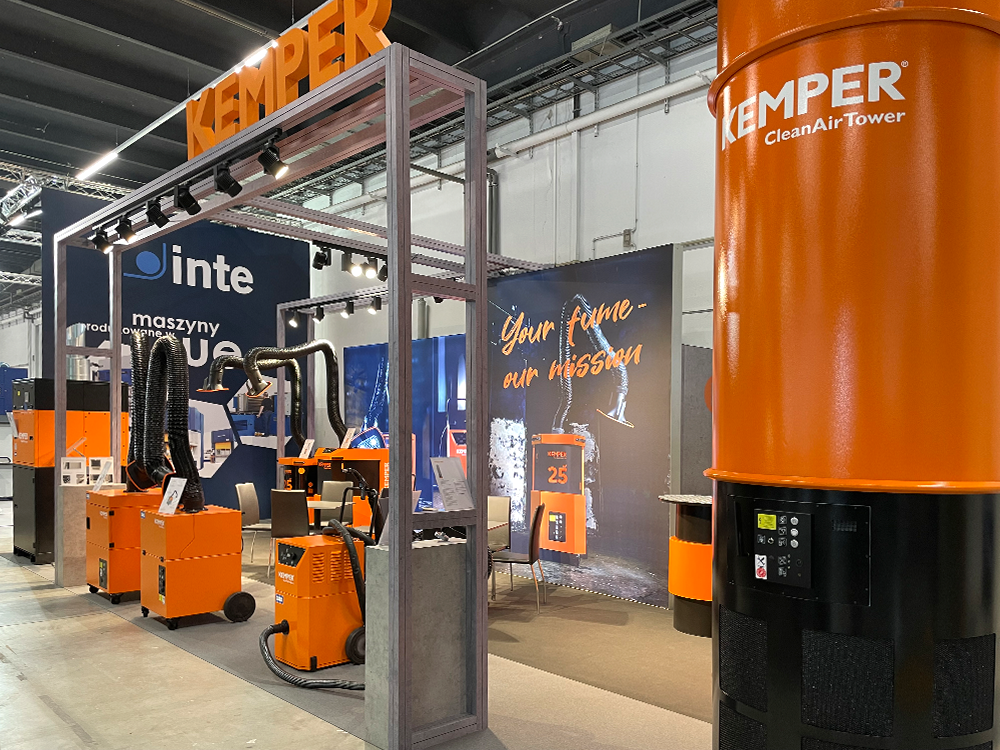
Design and Graphic Flexibility
Professional design of modular stands offers extensive freedom in terms of:
- Colors and finishes
- Graphic panel replacement
- Adapting visual identity to the current campaign
Changing the graphics does not require reconstructing the entire structure – simply replacing the printed panels is enough. This solution is particularly valued by brands participating in multiple events throughout the year.
Speed and Cleanliness of Assembly and Disassembly
In practice, assembling a system-based stand can take just a few hours, while traditional constructions may require several days of work.
Benefits:
- No need for extra (often billable) assembly hours
- Dust-free, “clean” setup and dismantling allows the stand to be installed in continuously used spaces, such as conference centers, shopping malls, hotels, museums, etc.
- Smaller assembly teams required to set up the exhibition stand
- Significantly lower logistical costs
This translates into a real reduction in technical schedule time. Depending on the size of the stand and project complexity, system assembly can be up to a day shorter compared to carpentry-based constructions. This not only saves operational costs but also reduces the risk of delays and increases predictability across the entire process.
Lightweight Construction
Aluminum profiles and lightweight panels significantly reduce the overall weight of the structure. This means:
- Less load on the exhibition hall floor
- Safer transportation
- Possibility to transport components even in a small van
The lightweight nature of modular construction directly enhances logistics efficiency and organizational flexibility. It simplifies transport, assembly, and planning for participation in multiple events throughout the year.
Reusability and Flexibility
Modular stands can be adapted depending on:
- The size of the rented space
- Permitted construction heights in a given hall or room
- The nature of the event
- The target market
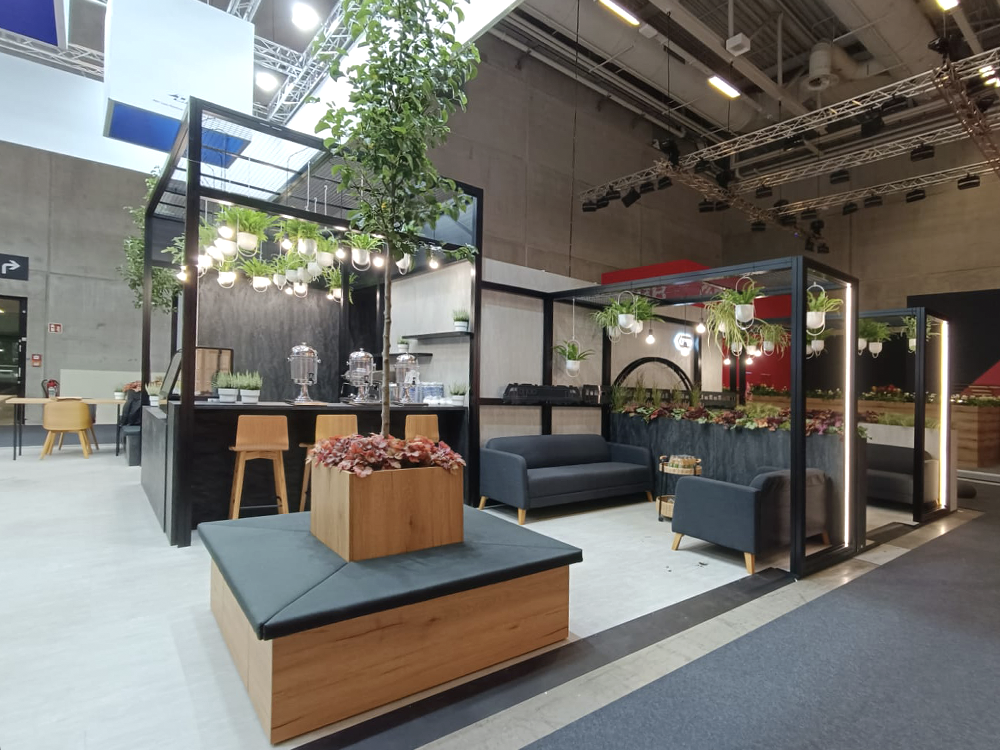
The flexible structure allows for graphic updates without altering the entire framework, shortening or expanding walls by adding modules, and introducing new elements such as arches or illuminated panels. The same set of components can be used in different configurations and floor areas – much like the building blocks mentioned earlier.
This translates into real cost savings and greater flexibility when planning participation in trade shows.
Sustainability
Compared to stands built from MDF panels, modular systems:
- Generate significantly less waste
- Use recyclable materials
- Reduce CO₂ emissions due to lighter transport
Trade show organizers increasingly set requirements for eco-friendly stands and reducing the carbon footprint generated during their construction. Using modular systems allows companies to meet these requirements, minimize environmental impact, and still maintain an attractive exhibition presence. Custom-made elements are often reused across multiple events, fully supporting a brand’s sustainable development strategy.
Economic Benefits
From our experience:
- The cost of implementing a modular system can be 10–30% lower
- Reduced assembly time lowers operational costs
- The ability to reuse components optimizes the marketing budget
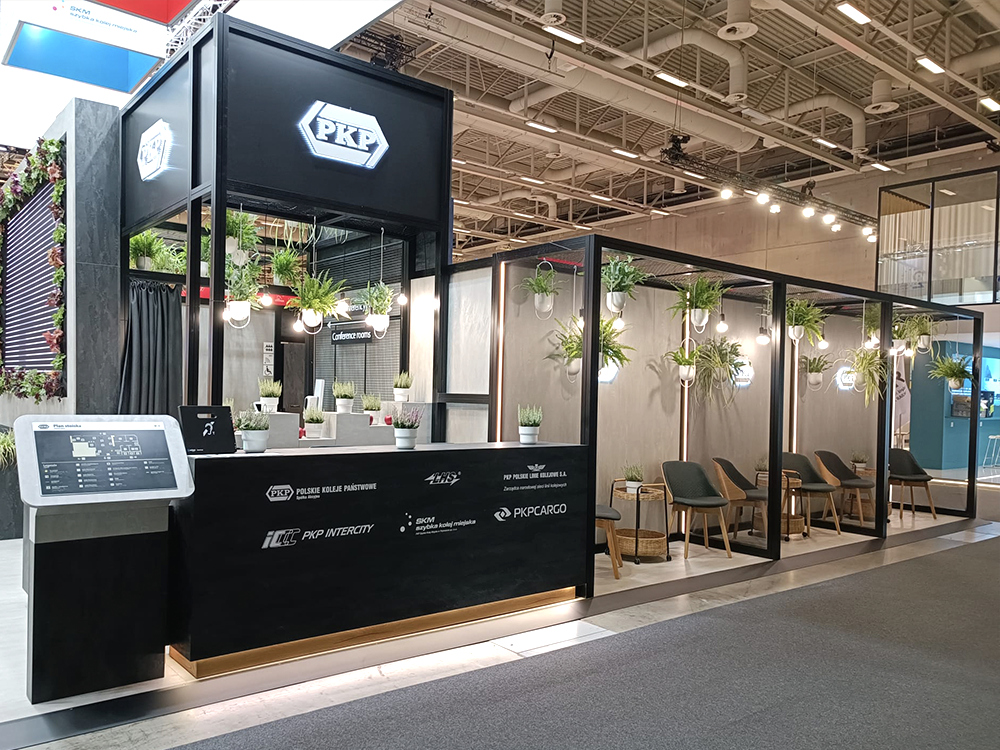
Additionally, by maintaining a base of various system elements, new modules and segments can be added as needed, allowing for the expansion of stand offerings, the creation of increasingly engaging designs, and the introduction of innovative visual solutions tailored to the client’s evolving needs.
Equally important, we collaborate with trusted partners producing modular systems, ensuring high-quality materials, structural stability, and reliable, on-time delivery. This combination of cost savings, quality, and creative flexibility gives our clients a real competitive advantage when planning their trade show presence.
Comparison – TONNY EYEWEAR Case Study
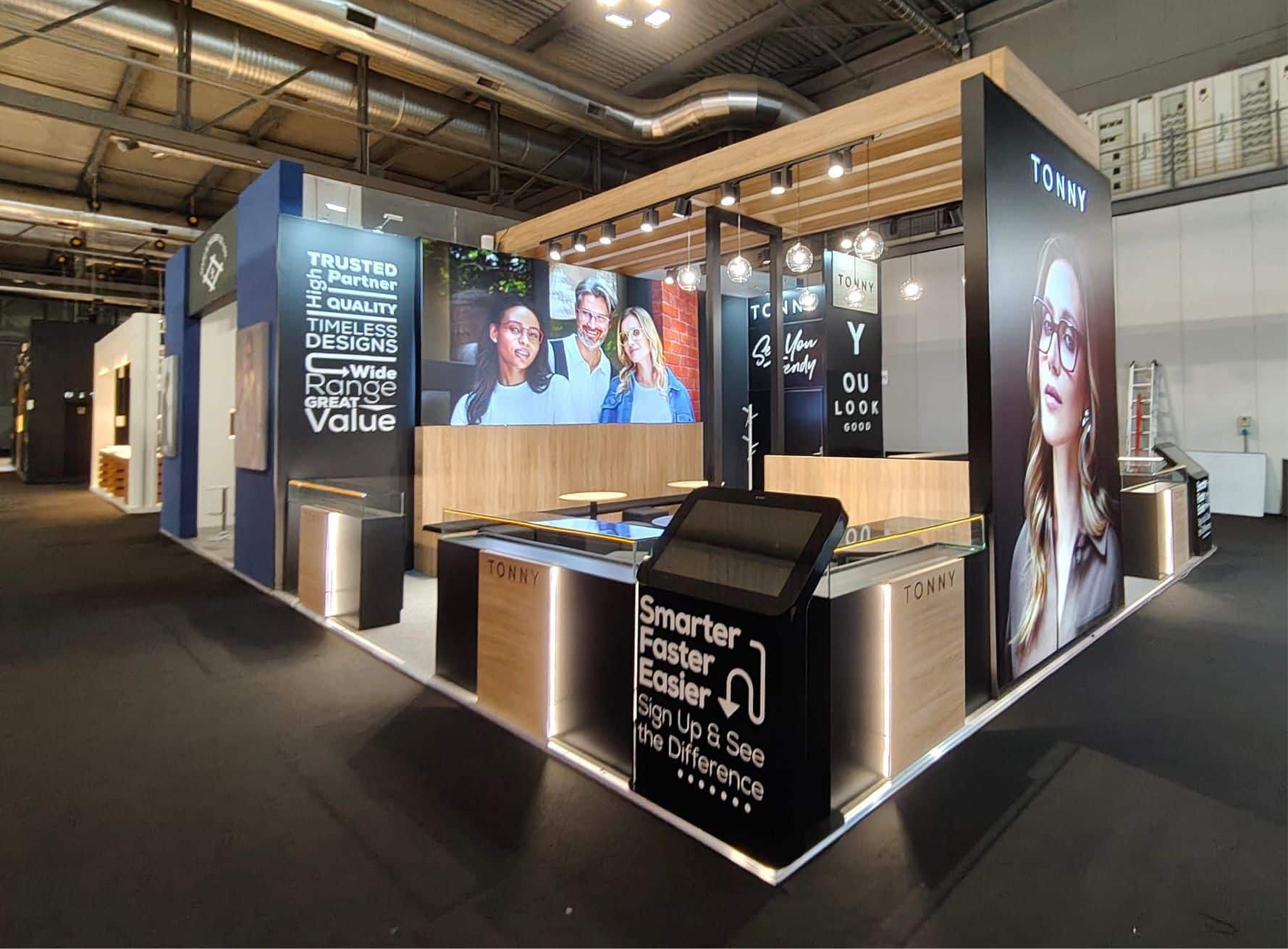
Using the modular stand for the TONNY EYEWEAR brand as an example, we compared two variants: a modular setup (implemented at MIDO) and a traditional stand built from wooden panels.
Cost
Modular system: approximately 10% lower than a panel-based stand.
Assembly Time
System-based stand: assembly typically takes one day less.
Assembly Team
A modular stand can be set up by 2 people, whereas a panel-based stand requires 3.
Design Flexibility
The system allows for variations adapted to different floor areas. In contrast, a carpentry-based construction would require reconstruction and time-consuming adjustments for each configuration.
Weight and Transport
Thanks to system components, the required cargo space was about one-third smaller than with a panel-based solution, significantly facilitating transport, storage, and logistics.
Sustainability
With the modular option, there is no need to dispose of large quantities of panels at the end of the usage cycle.
Durability and Reusability
A modular stand can be reused and reconfigured multiple times. With proper maintenance, its lifespan spans many trade show seasons.
The TONNY EYEWEAR project demonstrates that a modular stand is the perfect combination of efficiency, flexibility, and design. Its modular construction allows for rapid execution of attractive designs, repeated use, and easy adaptation to different spaces – saving time and costs while enhancing brand presence.
Example Projects
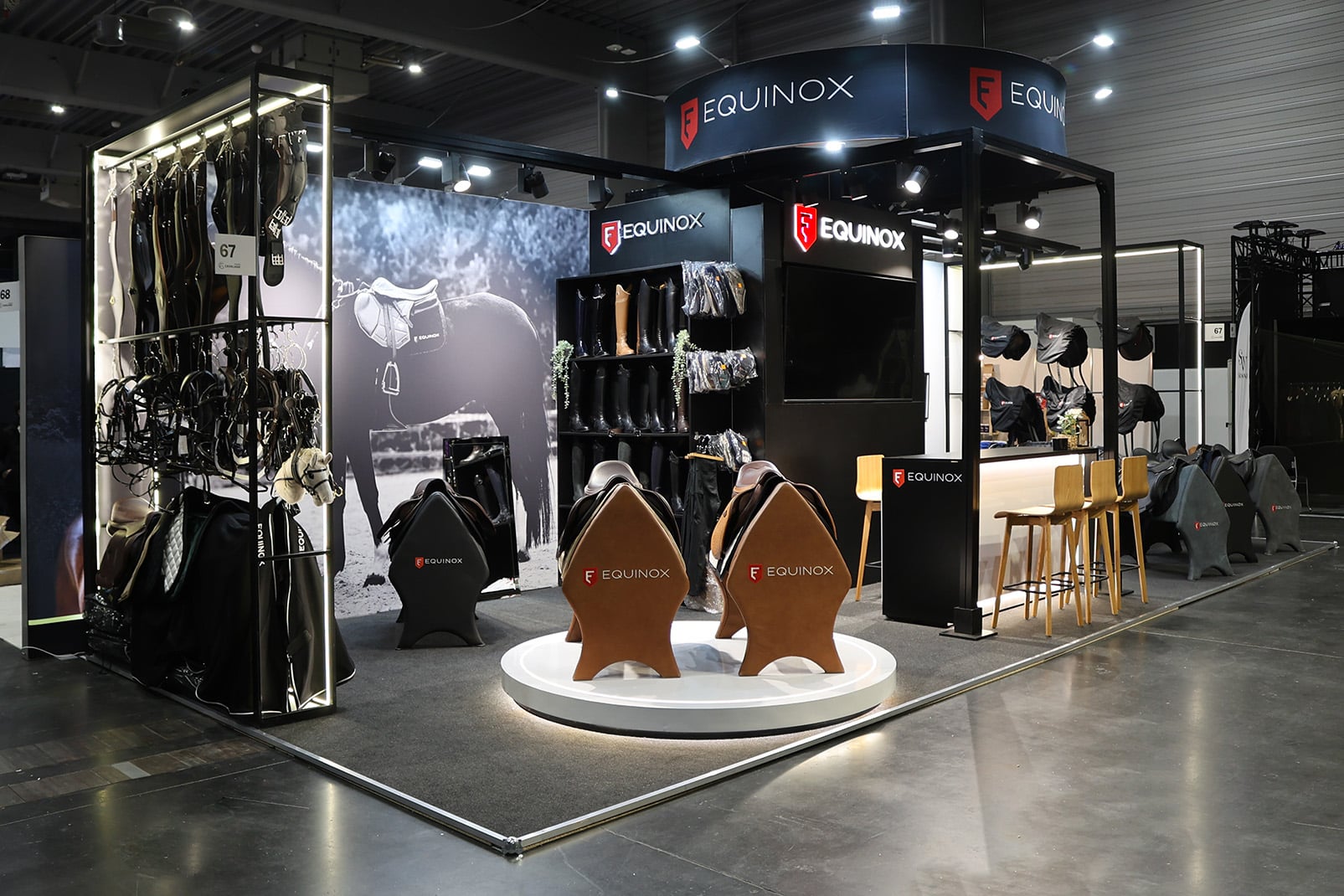
Our portfolio includes a section dedicated to system-based stands, showcasing both purely modular and hybrid solutions. These examples illustrate solutions effective in various conditions – from large, striking island stands to smaller, boutique-style spaces. We encourage you to explore the projects, discover the diverse configurations, and see how modular construction combines aesthetics, functionality, and flexibility in our designs.
Modern modular exhibition stands represent the future of the trade show industry. They combine:
- Flexibility
- Sustainability
- Cost efficiency
- High visual quality
A modern stand that integrates diverse solutions and technologies provides a real competitive advantage at trade shows. The more tools a designer has at their disposal, the more engaging and memorable the brand experience can be.
Modularity does not limit individuality. Thanks to our proprietary design innovations and an extensive network of partners, we can create modern solutions tailored to specific client needs, which can later become part of a permanent offering. Currently, we combine both modular systems and custom-designed elements in a single project, producing exhibitions that are unique in terms of form, functionality, and aesthetics.
At the heart of our projects is always the client. We listen, respond to changes, and maximize the potential of each project so that the stand is perfectly adapted to the context and stands out from the crowd.
We work with a proven system – you gain a distinctive, tailor-made stand. If you value a professional approach, comprehensive design, and efficient execution, contact us. We will create a solution that perfectly matches your brand and budget.