
COMMUNICATION LEVELS AT A TRADE SHOW BOOTH – Why they matter?
How Trade Show Booth Design Guides Visitors from First Impression to Brand Relationship
A successful trade show booth does not begin with walls, logos, or furniture.
It begins with a question:
What should a person feel when they see it for the first time?
In the exhibition environment, visitors pass dozens of brands, hundreds of messages, and thousands of visual stimuli every day. Today, attention is not won by the largest graphic or the loudest screen. It is captured by a space that can tell a story—intuitively, quickly, and on multiple levels.
That is why an effective trade show booth should be viewed as a communication system. It is not merely temporary architecture but rather a stage for the brand experience, where every element—from logo placement to visitor flow—shapes the way the brand is perceived.
Communication within a trade show booth operates simultaneously on several levels. Some are responsible for creating the first impression, others evoke emotions, while others encourage visitors to stop or initiate a business conversation. Only the combination of all these layers creates a space that not only looks attractive but actively supports the brand’s business objectives.
1. THE FIRST IMPRESSION ZONE
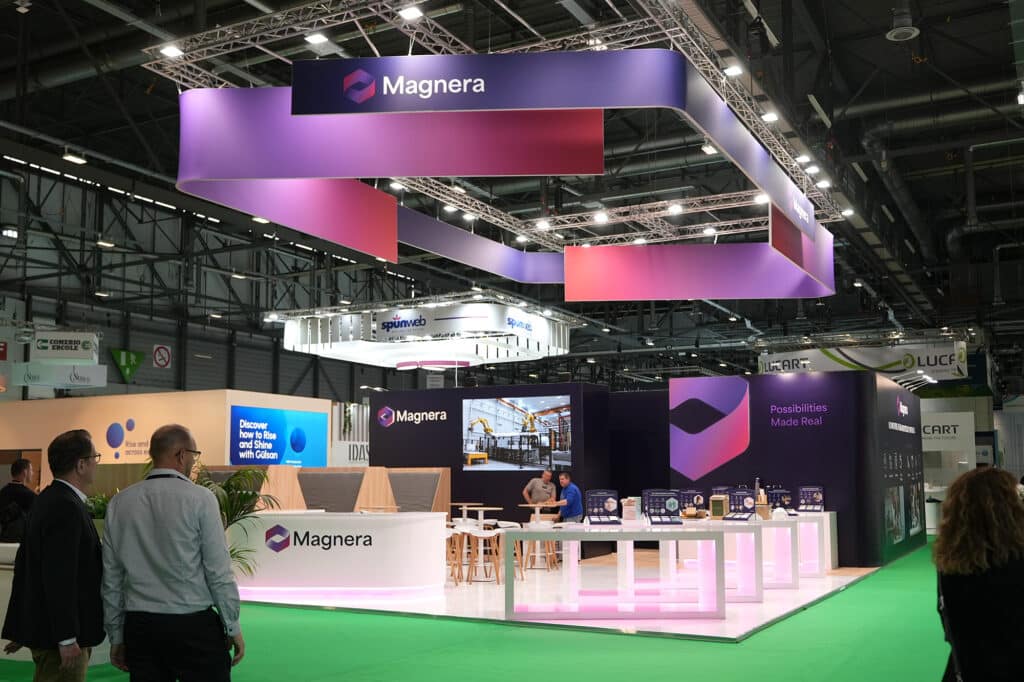
The Visual Level — “See Me”
The first few seconds determine everything.
At this stage, visitors are not reading content or analyzing the offer. They first absorb the form, lighting, proportions, and atmosphere of the space. This is why booth architecture becomes the brand’s first message.
The structure, height, openness of the layout, lighting rhythm, and even the direction of architectural lines subconsciously answer one question:
“Who is this brand?”
Minimalist geometry communicates precision and technological expertise. Soft forms and natural materials create a sense of accessibility and comfort.
Dynamic lines and multimedia suggest innovation and energy. This level works from a distance—often before a visitor consciously decides to approach the booth.
Goal: Capture attention and trigger an initial emotional response.
2. THE ENGAGEMENT ZONE
The Spatial Level — “Step Inside”
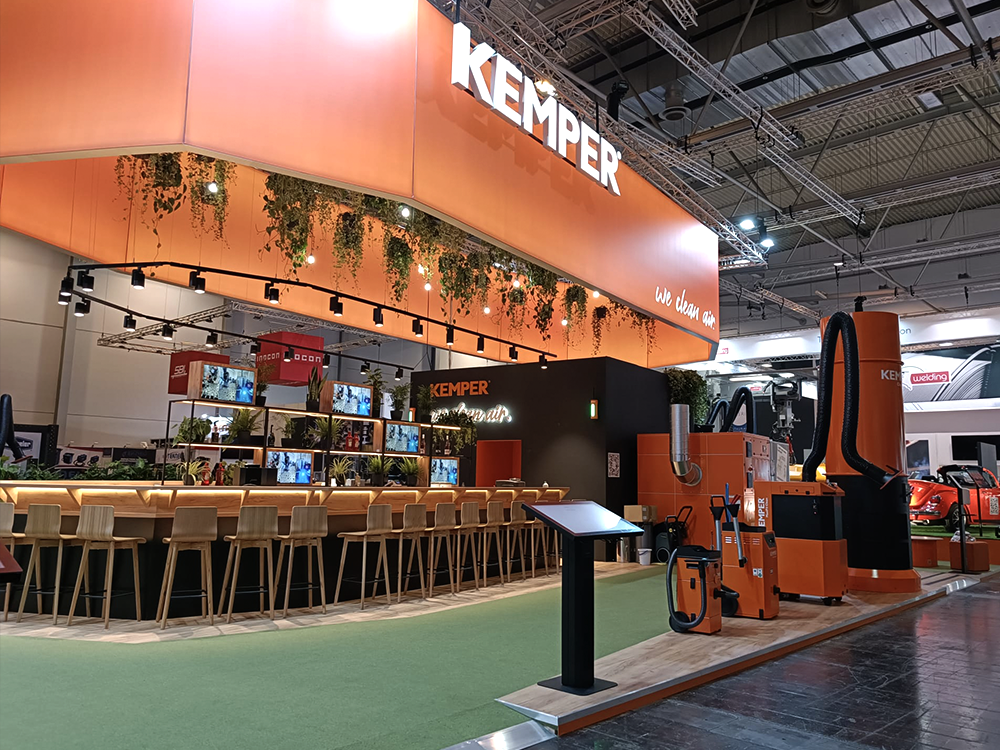
Once the booth attracts attention, the second stage of communication begins: the experience of space.
At this level, ergonomics and visitor flow become crucial. People instinctively assess whether a space feels open, safe, and intuitive. Narrow passages create distance. Too many stimuli create confusion. A well-designed layout naturally slows visitors down and encourages exploration.
This is where trade show booth design begins to function as experiential scenography.
Demo areas, meeting zones, interaction points, and product islands should guide visitors almost invisibly—without requiring instructions or excessive messaging.
Materials also play a major role:
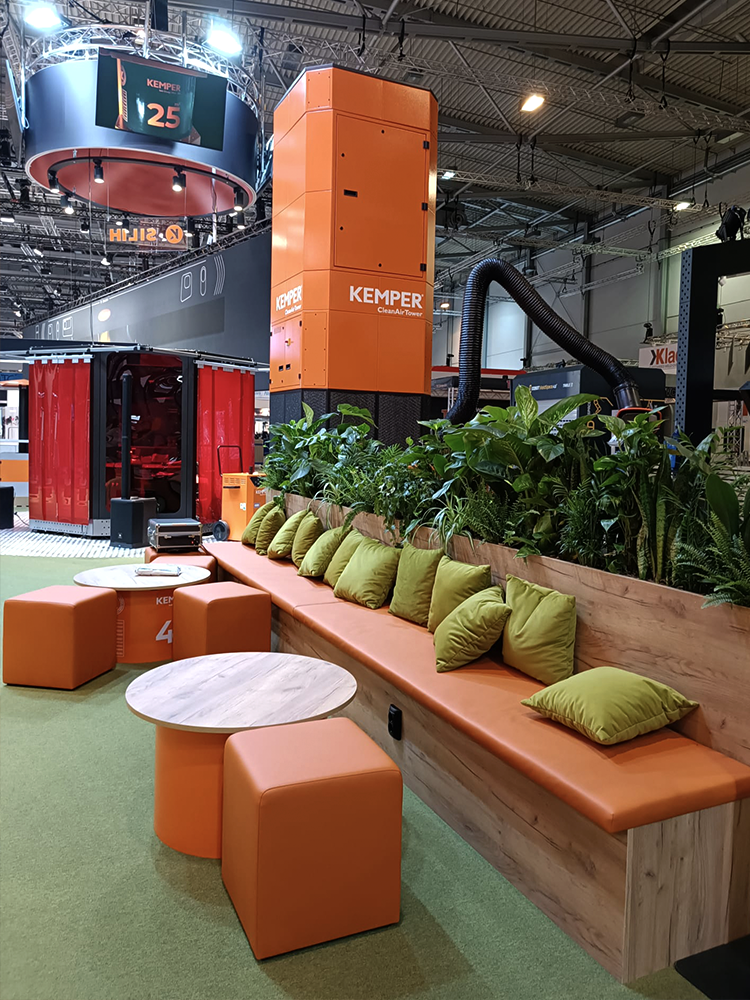
- Wood adds warmth.
- Glass creates lightness.
- Metal reinforces a technological image.
- Fabrics improve acoustics and conversational comfort.
Atmosphere does not happen by accident. It is designed as deliberately as graphics or logos.
Goal: Encourage visitors to stay longer and engage with the space.
3. THE UNDERSTANDING ZONE
The Informational Level — “Tell Me the Story”
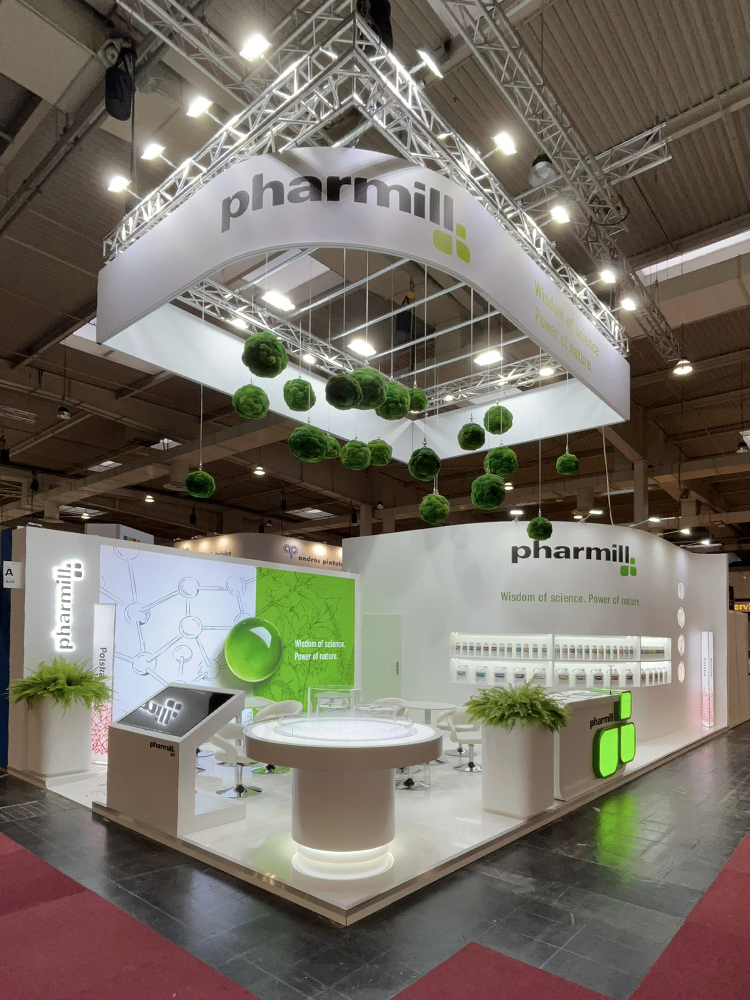
This is the most important communication level within a trade show booth because it is where aesthetics meet content.
The visitor has already stopped. Now, within just a few moments, they must understand:
- What the company does.
- What makes it different.
- Why it deserves their attention.
This is where storytelling begins.
A well-designed booth does not overwhelm visitors with a catalog of information. Instead, it guides them through a story—from a problem, through a solution, to a result.
That is why the following elements play an increasingly important role:
- Multimedia displays
- Process animations
- Dynamic presentations
- Infographics
- Short and impactful messages
The best booth concepts function like a well-produced movie trailer: they reveal just enough to spark curiosity and encourage conversation.
Goal: Communicate the brand’s key value proposition in a fast, intuitive, and engaging way.
4. THE RELATIONSHIP ZONE
The Interpersonal Level — “Let’s Talk”
Even the most spectacular booth cannot fulfill its purpose without people.
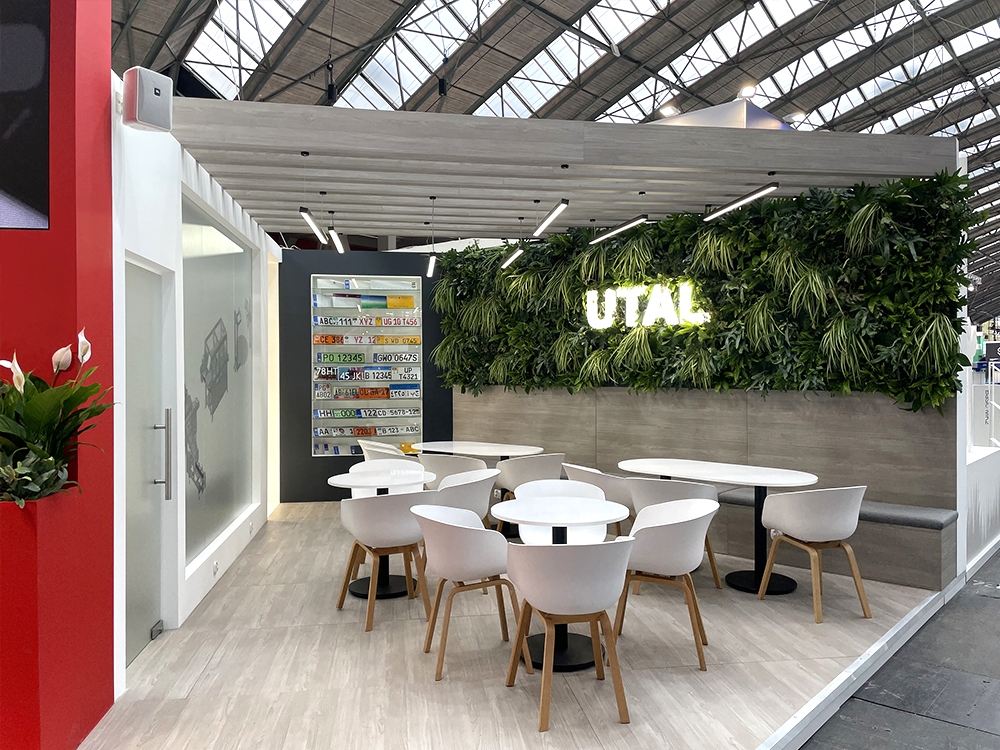
Conversation is what transforms an anonymous visitor into a potential client, partner, or brand ambassador. For this reason, meeting areas should be designed with the same attention as the exhibition space itself.
Key factors include:
- Acoustics
- Privacy
- Seating comfort
- Distance between meeting tables
- Placement of screens and lighting
A well-designed environment does not create pressure. It creates comfort and professionalism.
This is where brand communication becomes most human.
Goal: Build trust and transform interest into meaningful business relationships.
5. THE MEMORY ZONE
The Emotional Level — “Remember Me”
The strongest communication often occurs after visitors leave the booth.
They may not remember every product specification or presentation detail, but they will remember the emotion, atmosphere, and overall experience.
Did the brand feel innovative?
Was the space welcoming?
Did the conversation feel natural?
Did the booth stand out from the competition?
It is this emotional level that determines whether the brand remains in the visitor’s memory after the exhibition has ended.
Goal: Create an experience worth remembering.
The Vertical Communication System in Trade Show Booth Architecture
From an architectural perspective, communication within a trade show booth also operates vertically. Visitors read the space in layers—from elements closest to their bodies to messages visible from a distance.
Each height level serves a different function and corresponds to a different stage of brand interaction.
LEVEL 0 — ACTION ZONE
Direct Communication | 0–120 cm
This is the level of physical interaction with the brand.
It includes all elements that visitors can touch, take, scan, or interact with:
- Brochures
- Material samples
- Business cards
- QR codes
- Interactive tablets
This is the most practical communication layer—fast, direct, and action-oriented.
Function: Initiating contact and generating leads.
LEVEL 1 — READABILITY ZONE
Visual Communication | 120–140 cm
This is the most important level of human perception, corresponding to the natural field of vision of a standing visitor.
The most important messages should be located here:
- Brand slogans
- Key product information
- Pictograms
- Simplified sales messages
This is the zone of immediate understanding.
Visitors should not have to search for information. They should absorb it intuitively while walking past the booth.
Function: Delivering the brand’s core message instantly.
LEVEL 2 — STORYTELLING ZONE
Narrative and Engagement | 140–200 cm
This is the level where stories are built.
Multimedia content, larger graphics, and dynamic presentations placed here are designed to deepen visitor interest and extend interaction time.
At this stage, booth design begins to work emotionally.
Videos showcasing manufacturing processes, technology animations, case studies, and project presentations allow visitors to enter the brand’s world more deeply.
Function: Building engagement and emotional connection.
LEVEL 3 — ORIENTATION ZONE
Signage Communication | Above 200 cm
The highest communication layer functions like an urban landmark.
Suspended elements, elevated logos, and illuminated brand identifiers should be visible from a distance—above the crowd, above competitors, and above the visual noise of the exhibition hall.
At this level, communication must be extremely simple and clear.
The higher the message is positioned, the fewer details it should contain and the greater the emphasis should be placed on symbolism, recognition, and visibility.
Function: Attracting attention and ensuring brand identification within the exhibition space.
The Trade Show Booth as a Brand Experience
Today’s most effective trade show booths are no longer simple product displays. They have become multidimensional brand experiences designed to guide visitors step by step—from the first glance to a meaningful business conversation.
For this reason, communication at a trade show booth should never be treated as an addition to architecture. It is what gives the space meaning.
A thoughtfully designed booth does more than attract attention.
It builds relationships, organizes emotions, and ensures that the brand remains memorable long after the event itself has ended.
If you are looking for a trade show booth that does more than capture attention—one that consciously guides visitors through a complete brand experience, from the first impression to a real business conversation – LET”S TALK.
We design and build professional trade show booths where architecture, communication, and storytelling work together as one cohesive experience.
Content Consultation:: Weronika Antczak / Architect