
Freestanding Graphic Elements for Trade Fair Stands
What Are Freestanding Graphics?
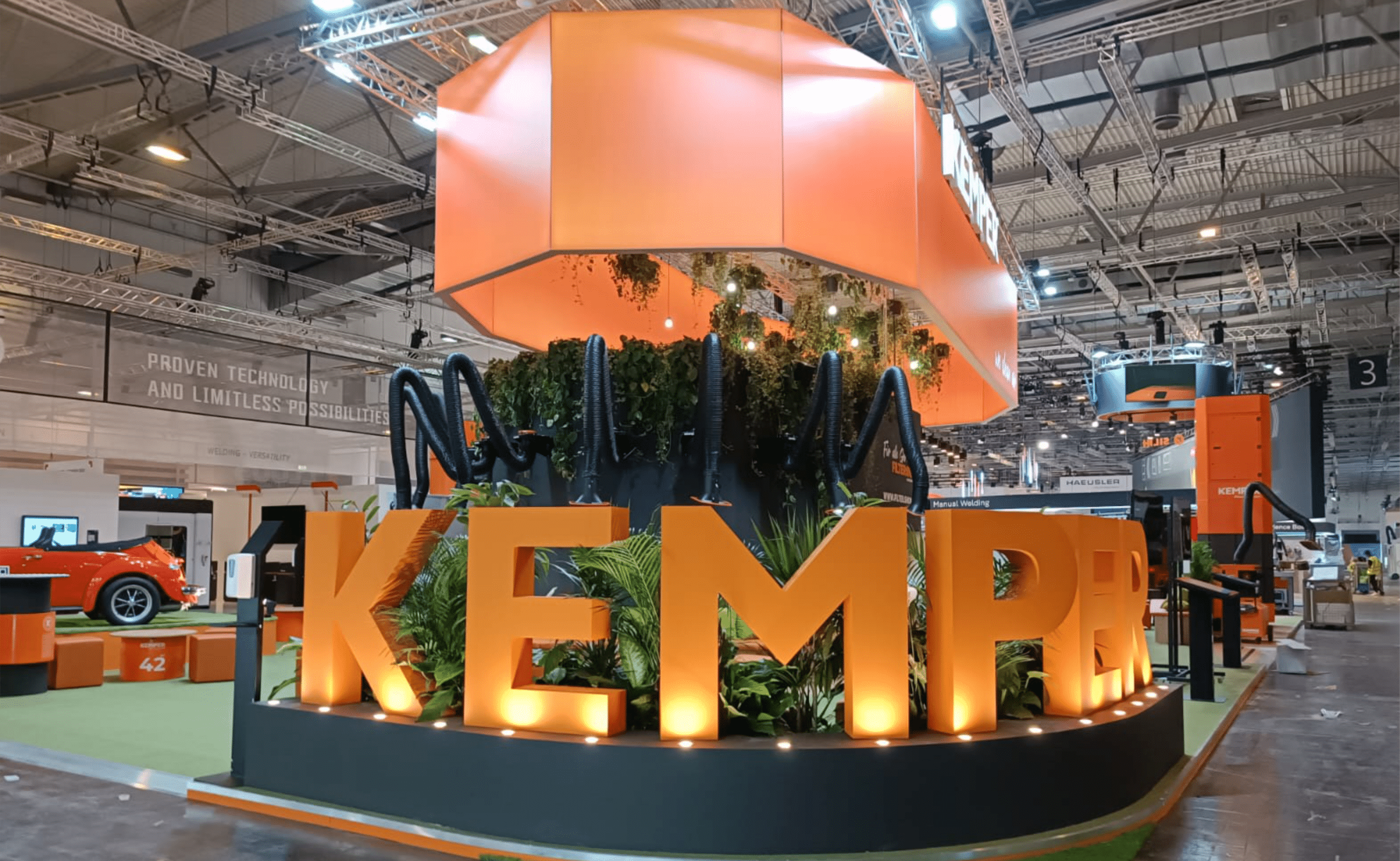
Freestanding graphics are a group of advertising displays that do not require installation on walls or exhibition structures. These solutions make it possible to organize stand space flexibly and quickly change the layout of the display.
Freestanding graphics are extremely popular at trade fairs, conferences, and events because they combine mobility with high marketing effectiveness.
The most popular types of freestanding graphics
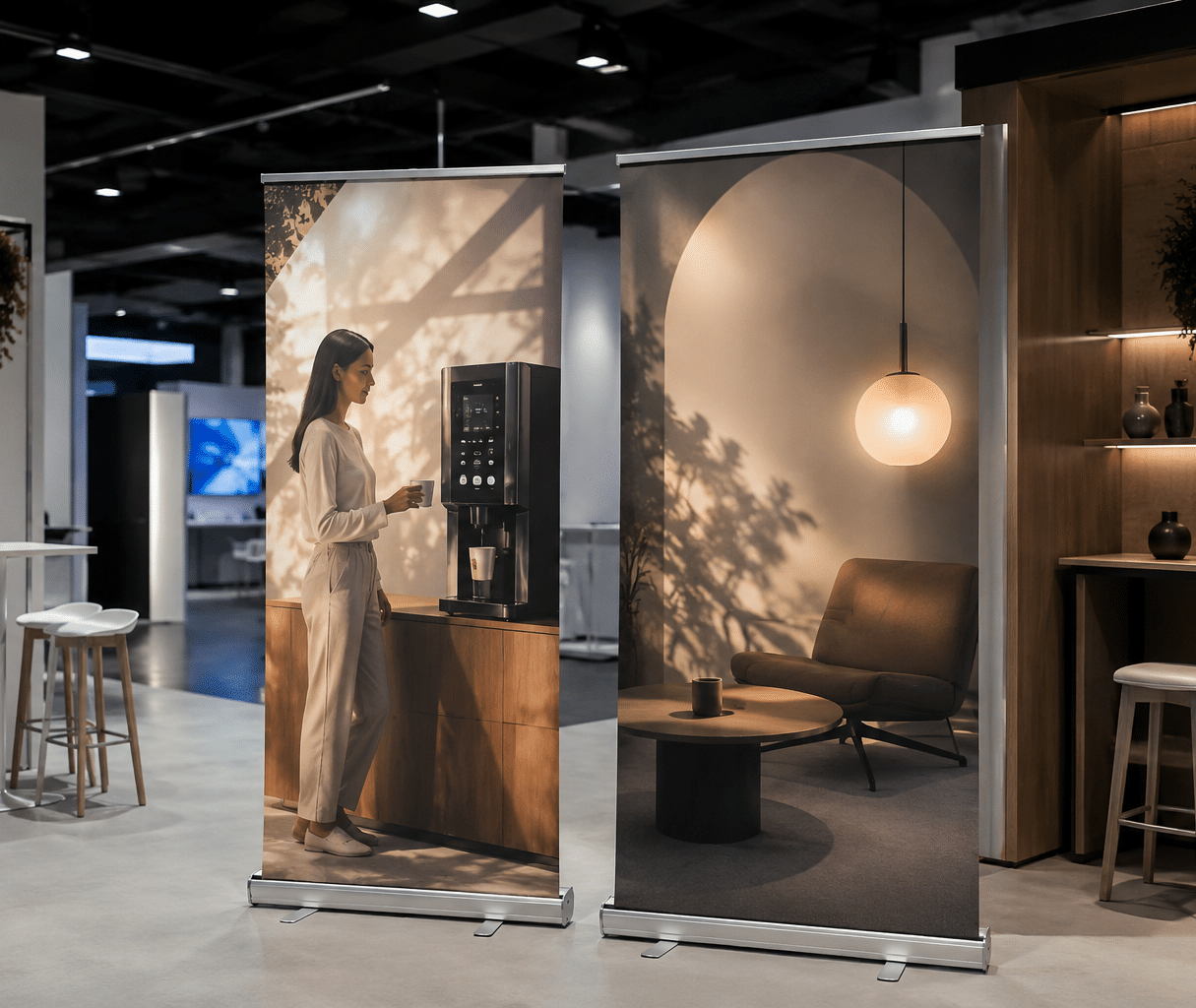
Roll-up banners
One of the most universal and mobile advertising solutions. Roll-up banners are easy to transport and quick to assemble. They are widely used at trade fairs and exhibitions because they allow brands to present key messages clearly in a compact, eye-catching format
Advertising backdrops
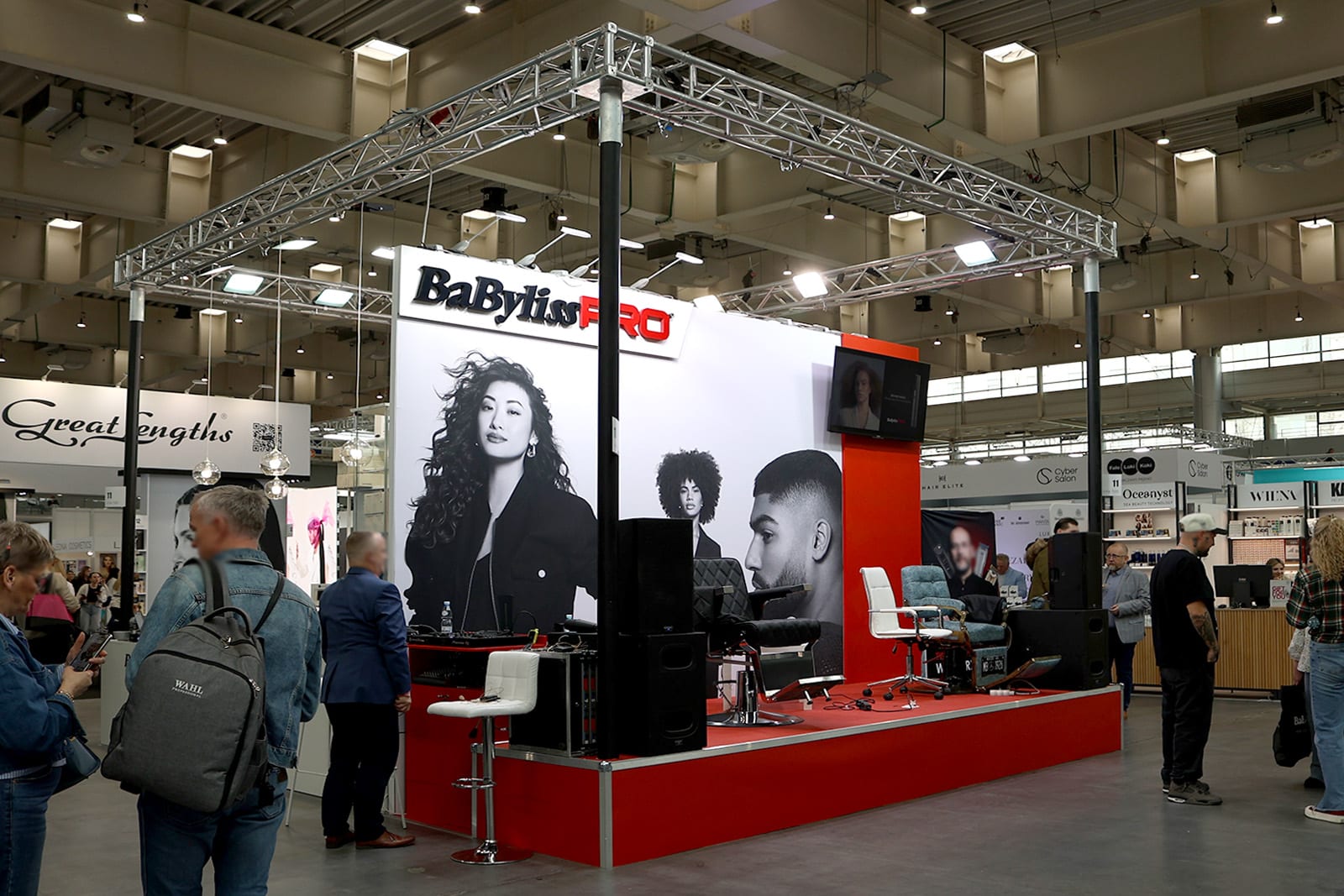
They are available in textile, magnetic, and modular versions. They form a key element of many trade fair stands. They are often used as a main visual backdrop to build a strong and professional brand presence in exhibition spaces.
Advertising totems
Vertical structures used for signage and visual communication. They are designed to present key information, branding, or directions in a clear and highly visible way, making them effective in guiding attention and enhancing brand recognition in both indoor and outdoor spaces such as retail zones, events, and public areas.
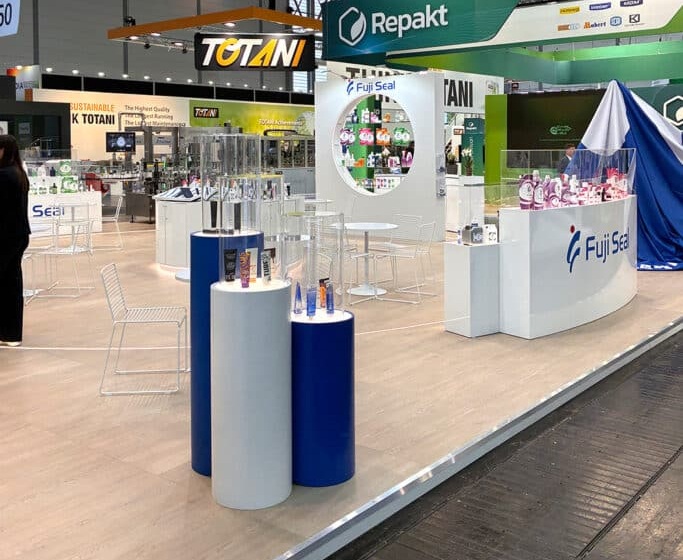
Product stands
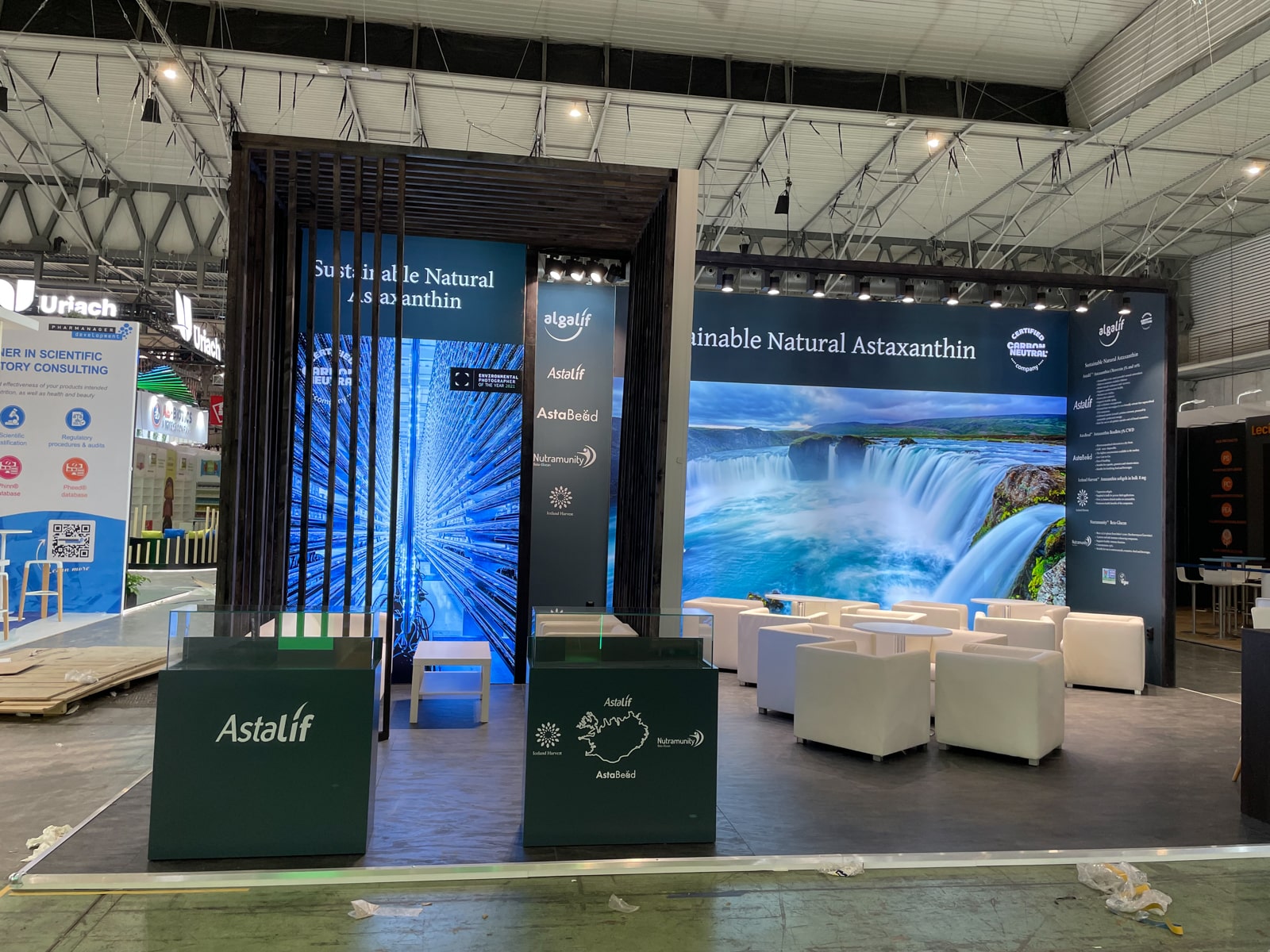
They allow products and marketing materials to be displayed in a clear and attractive way, helping to draw customer attention and improve engagement. They are often used in retail environments, trade fairs, and promotional events to support sales and reinforce brand messaging.
A-frame advertising boards
They are often placed at the entrance to a stand or in communication zones, where they effectively guide visitors and highlight key messages in high-traffic areas.
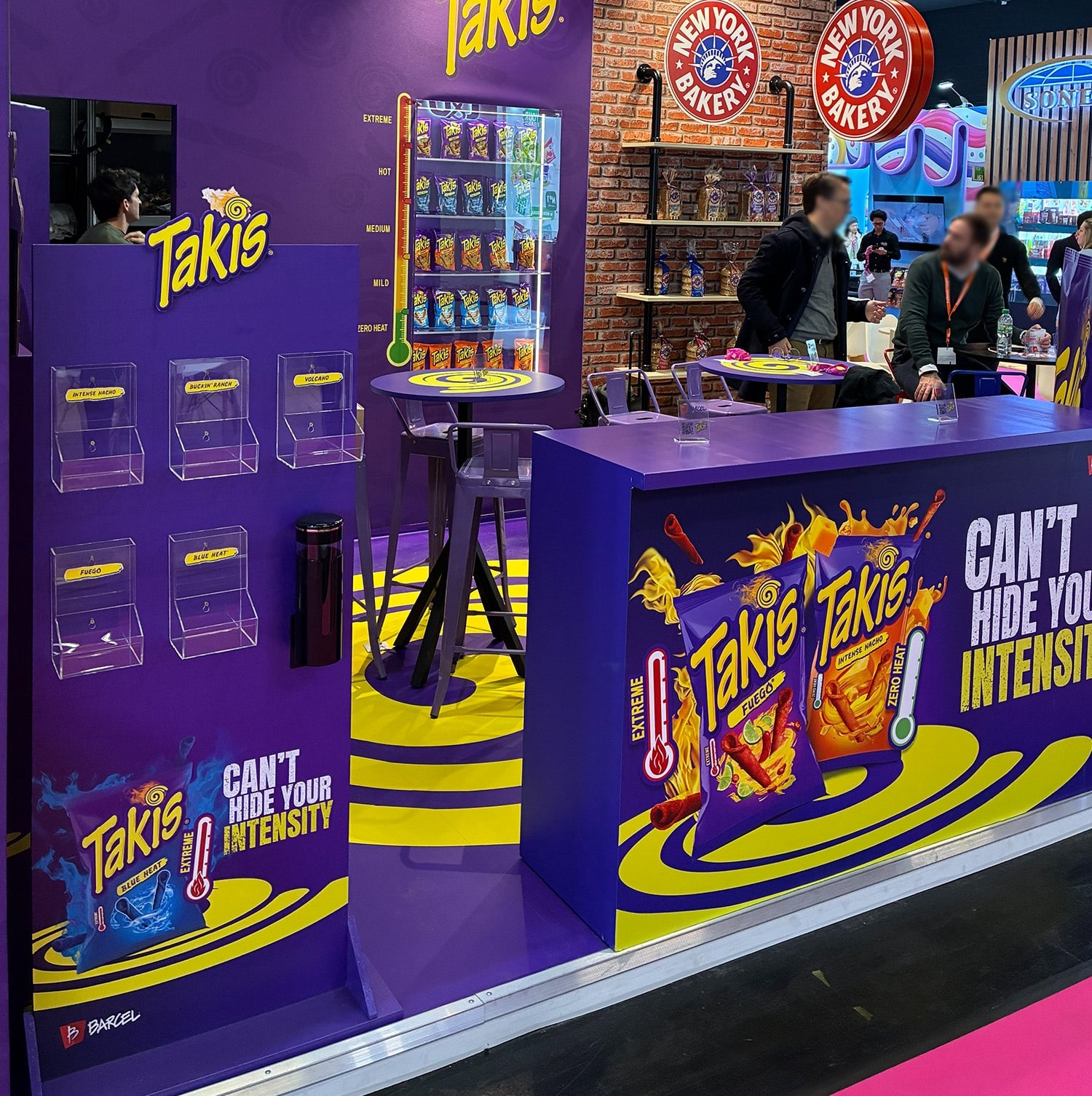
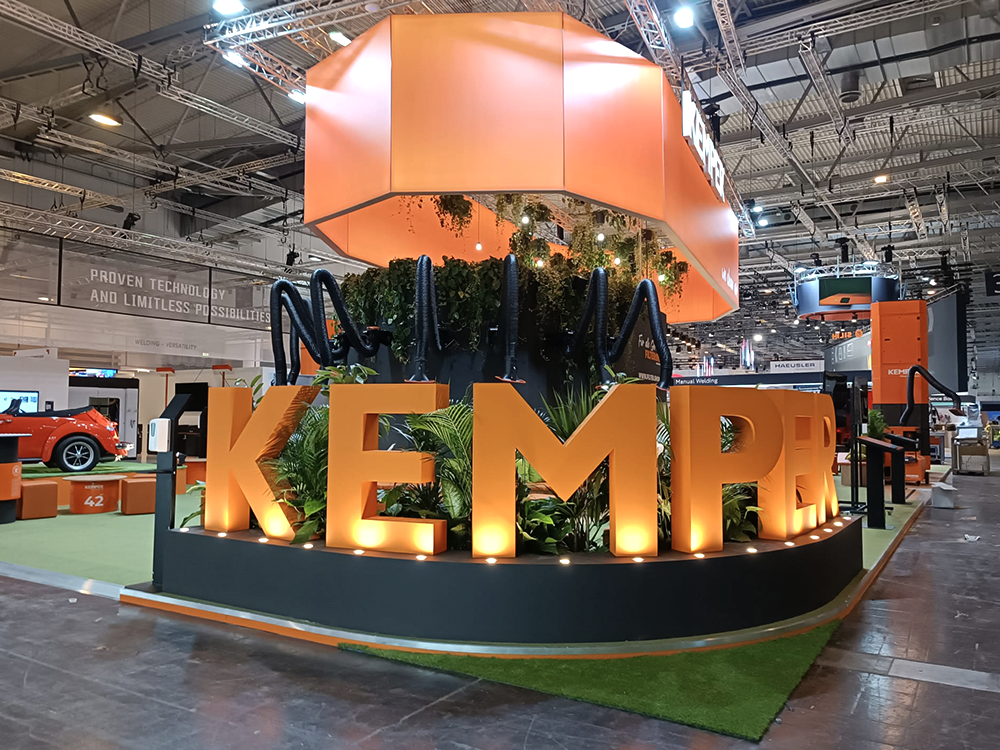
Advantages of freestanding display graphics
Freestanding display graphics are primarily valued for their mobility and high versatility of use. These structures are easy to transport, quick to assemble, and can be reused multiple times across different trade fairs and promotional campaigns. An additional advantage is their relatively low implementation cost, as well as the ability to freely arrange exhibition space depending on the needs of a specific event. Thanks to their universal character, freestanding graphics work equally well at large industry trade shows, as well as at local events, conferences, and product presentations.
What materials are used in freestanding display graphics?
Freestanding display graphics use materials that combine aesthetics, durability, and ease of transport. The most commonly used include advertising textiles, PVC, aluminium, dibond, and plexiglass, which make it possible to create both lightweight, mobile structures and more premium, high-end displays. Increasingly popular are also eco-friendly solutions made from honeycomb cardboard, as well as reusable systems that align with current trends in sustainable exhibition stand design.

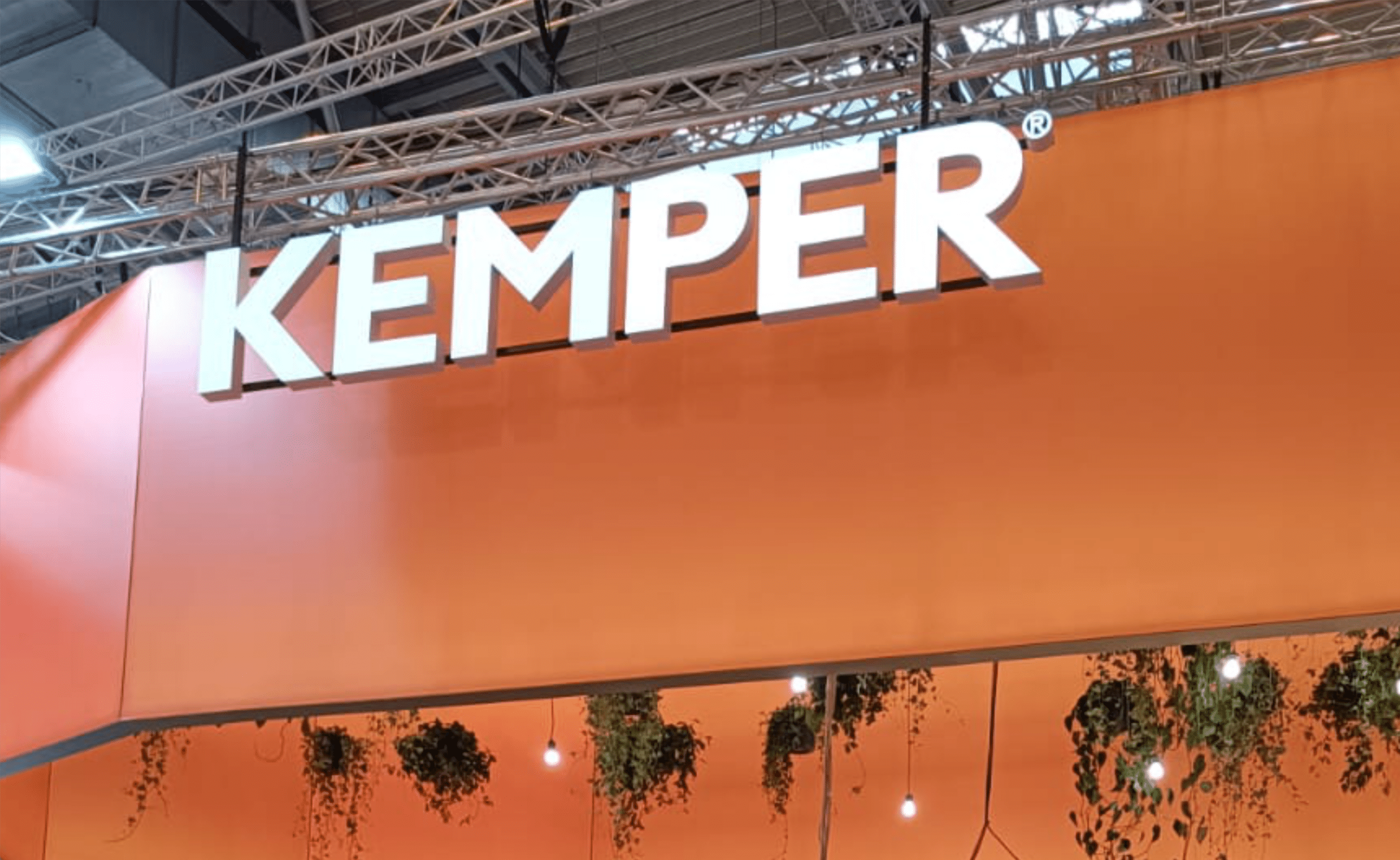
How to design effective freestanding display graphics?
A good freestanding display graphic should:
- be readable from a long distance,
- feature clear branding,
- contain a limited amount of text,
- use strong contrast,
- direct the viewer’s attention to the key message.
In the context of trade fairs, structural stability and resistance to intensive use are also very important.
Freestanding graphics vs modular systems
Modern exhibition systems are increasingly based on modular solutions that enable quick graphic replacement. This allows a single structure to be used at multiple events. This approach significantly reduces booth production costs and makes it easy to adapt the visual message to different campaigns and target audiences.
Trends in freestanding display graphics
Contemporary trends in freestanding display graphics focus on lightweight construction, functionality, and ease of use. Lightweight textile systems, tool-free solutions enabling quick assembly, and LED-lit stands that enhance visibility are becoming increasingly popular. Another important direction is the use of eco-friendly materials as well as hybrid solutions that combine traditional print with multimedia elements, allowing for more modern and engaging presentations at trade fair stands.